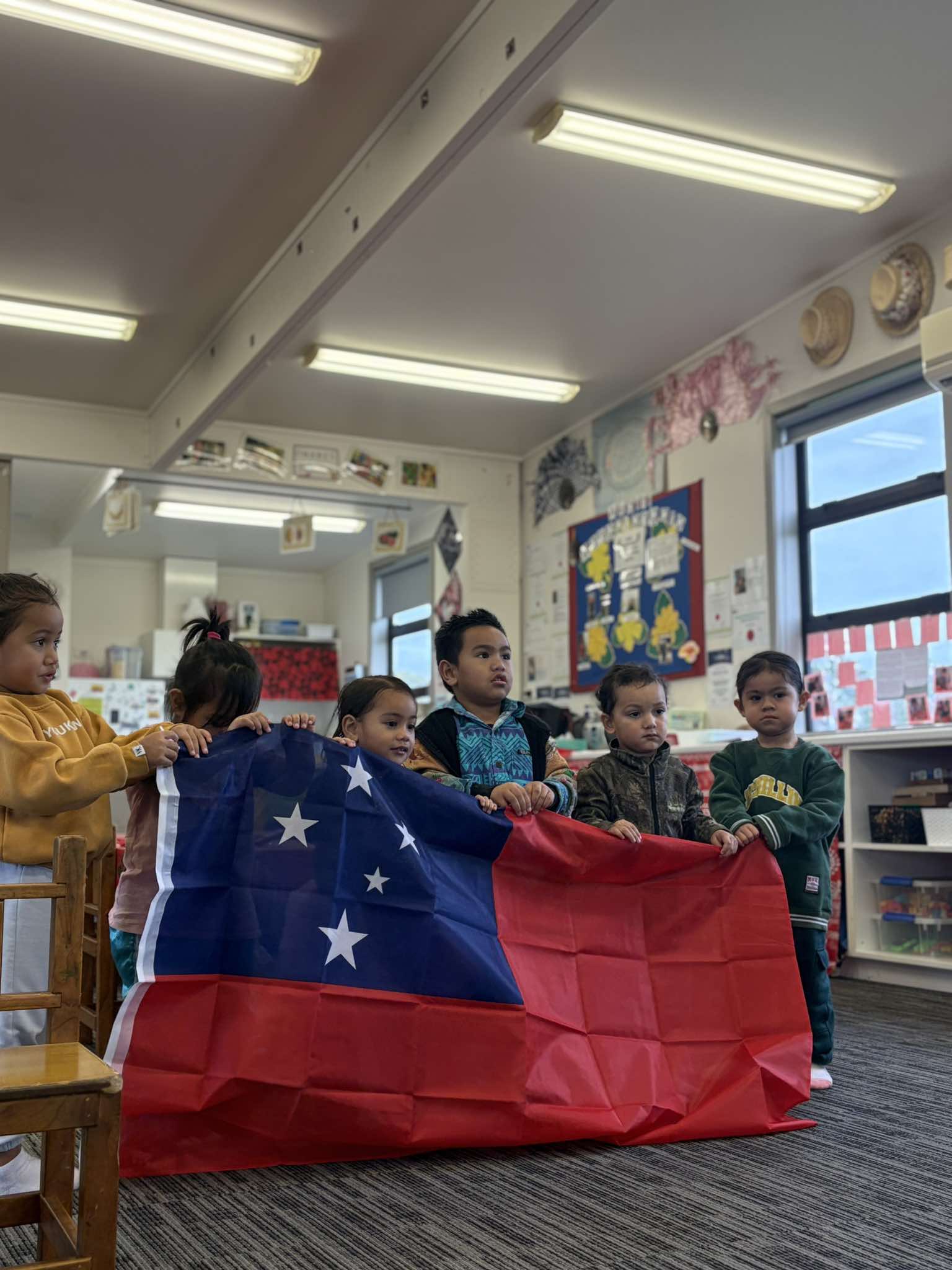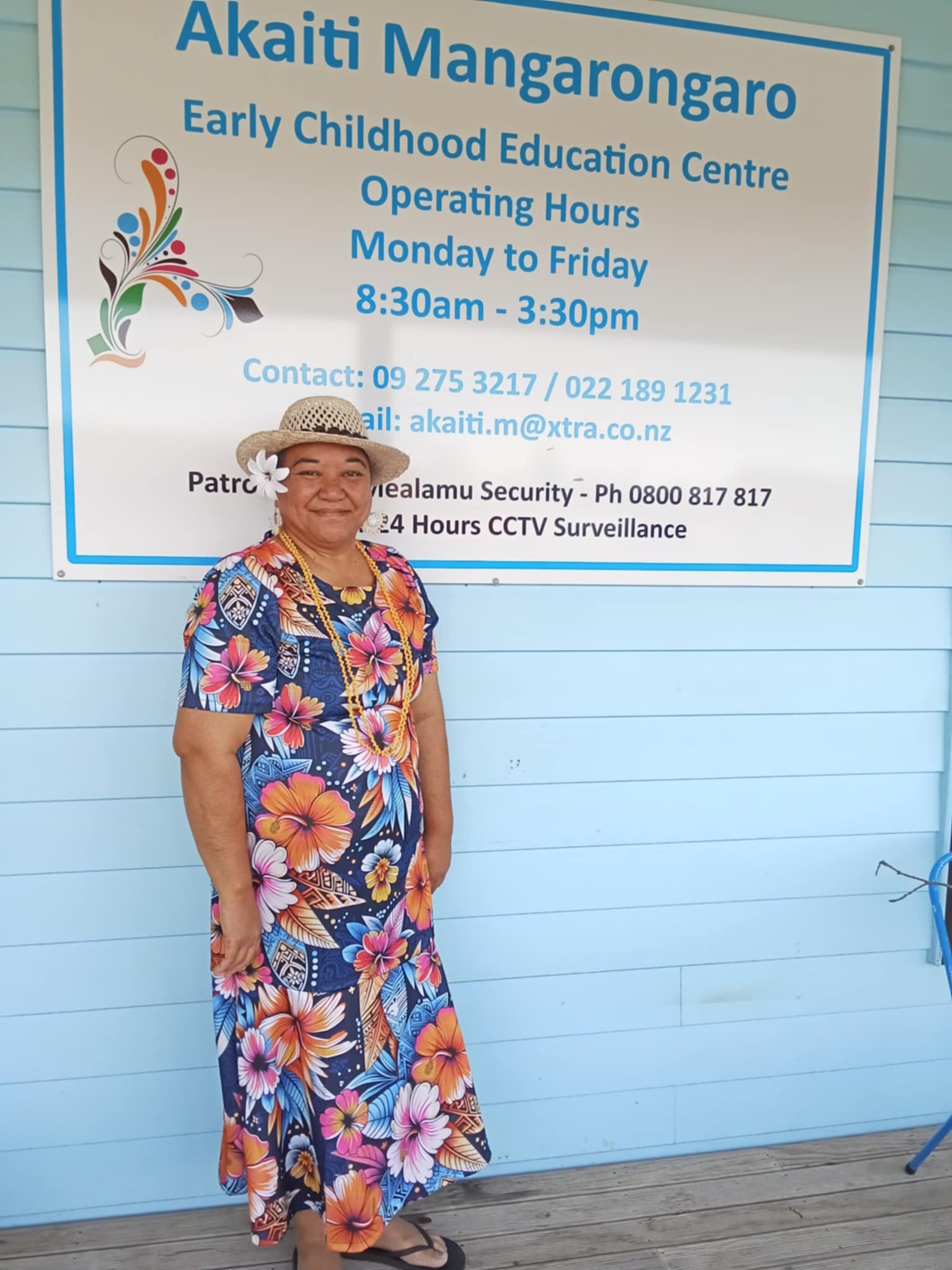
"Each of their special pieces tells a story that was shared to our teachers and tamariki. A piece that connects to their parents' and grandparents' — and uniquely represents their identity of who they are and which island they come from in the Cook Islands."
— Temaria Tengange · Cook Island Language Week, August 2025Every August, Akaiti Mangarongaro transforms. Families arrive carrying parcels wrapped in cloth, cardboard boxes held carefully with both hands, woven bags containing items that have travelled across oceans and generations. It is Cook Island Language Week, and the centre becomes a living museum — a space where the past walks through the door and sits alongside the tamariki who will carry it forward. A hand-carved uto. A tivaevae passed down from a grandmother. A photograph of a church on Tongareva. A shell necklace made on Mangarongaro. Each piece is placed with care, and each piece becomes a doorway into a conversation that bridges decades and thousands of kilometres of Pacific ocean.
The Mini Museum at Akaiti Mangarongaro is not a formal exhibition — it is something more powerful. It is a community practice where families entrust the centre with their most meaningful cultural possessions, and where teachers use those objects as the starting point for learning that is deeply personal and culturally anchored. When a child brings in their grandmother's ei katu and explains where it came from, that child is not just sharing an object. They are practising storytelling, building vocabulary in their heritage language, developing confidence in front of their peers, and — most importantly — experiencing the pride that comes from knowing their family's story matters. The teachers weave these stories into the week's programme, so the artifacts are not just displayed but actively integrated into songs, art, and conversation.
This practice also builds something essential between the centre and its families: trust. When a parent entrusts a treasured heirloom to the centre, they are saying, "I believe you will honour this." And when the centre treats that item with the same reverence the family does, the relationship deepens. Over 28 years, this cycle of trust has created a bond between Akaiti Mangarongaro and its community that no policy document could replicate. Families do not just send their children here — they invest their heritage here. That is a fundamentally different relationship, and it is one of the reasons the centre has endured where others have not.
The intergenerational connection these artifacts create is perhaps the most important outcome of all. In a world where Pacific languages and cultural practices face constant pressure from mainstream culture, these objects — and the stories attached to them — become anchors. They remind tamariki that they belong to something larger than themselves. They remind families that their culture is not a relic but a living, breathing presence in their children's daily education. And they remind the wider community that a small centre in Mangere East is doing something extraordinary: keeping identity alive, one treasured piece at a time.